
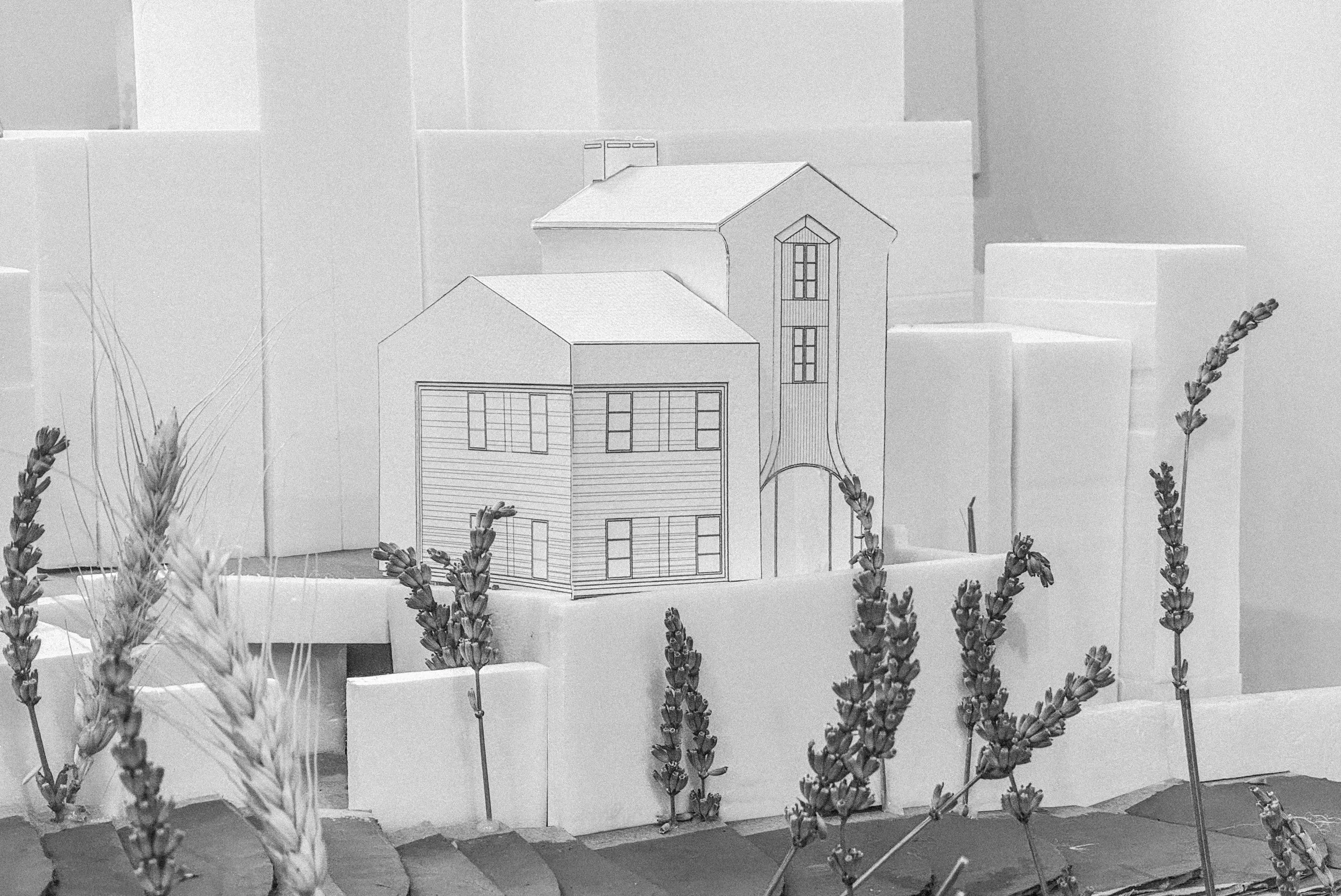
Weaving Salt & Stone
Beginning as an exploration in the vernacular of Lacoste, France, the project seeks to organize and call out the complex curation of details visible in the medieval village while weaving them into a contemporary language to maintain the sense of place. Gathering in a kitchen, visitors will get to prepare a meal made up of recipes each has brought from their own lives. The ingredients will begin to break down the language barrier and encourage communication between the villagers and students. Outside, community gardens will provide ingredients for the kitchen while above, loft style apartments offer a simple yet elegant space for visitors to unwind.
Location
Lacoste, France
Designed
Fall 2025
The exploration began with a curation of research of the local vernacular. Hundreds of images attempt to call out the unique personalities of existing buildings, organized above by type (Door, window, roof, stair, arch, balcony, stone, & experience). After the exploration, common features are called out to begin to classify the vernacular into replicable features. Most architecture in Lacoste features random facades but for categorization & contemporary design, this was ignored.
Once the features and facades were categorized, the building was designed by selecting some of these standards and positioning them into a massing model. This was later modernized while keeping the window placement and general proportions the same.
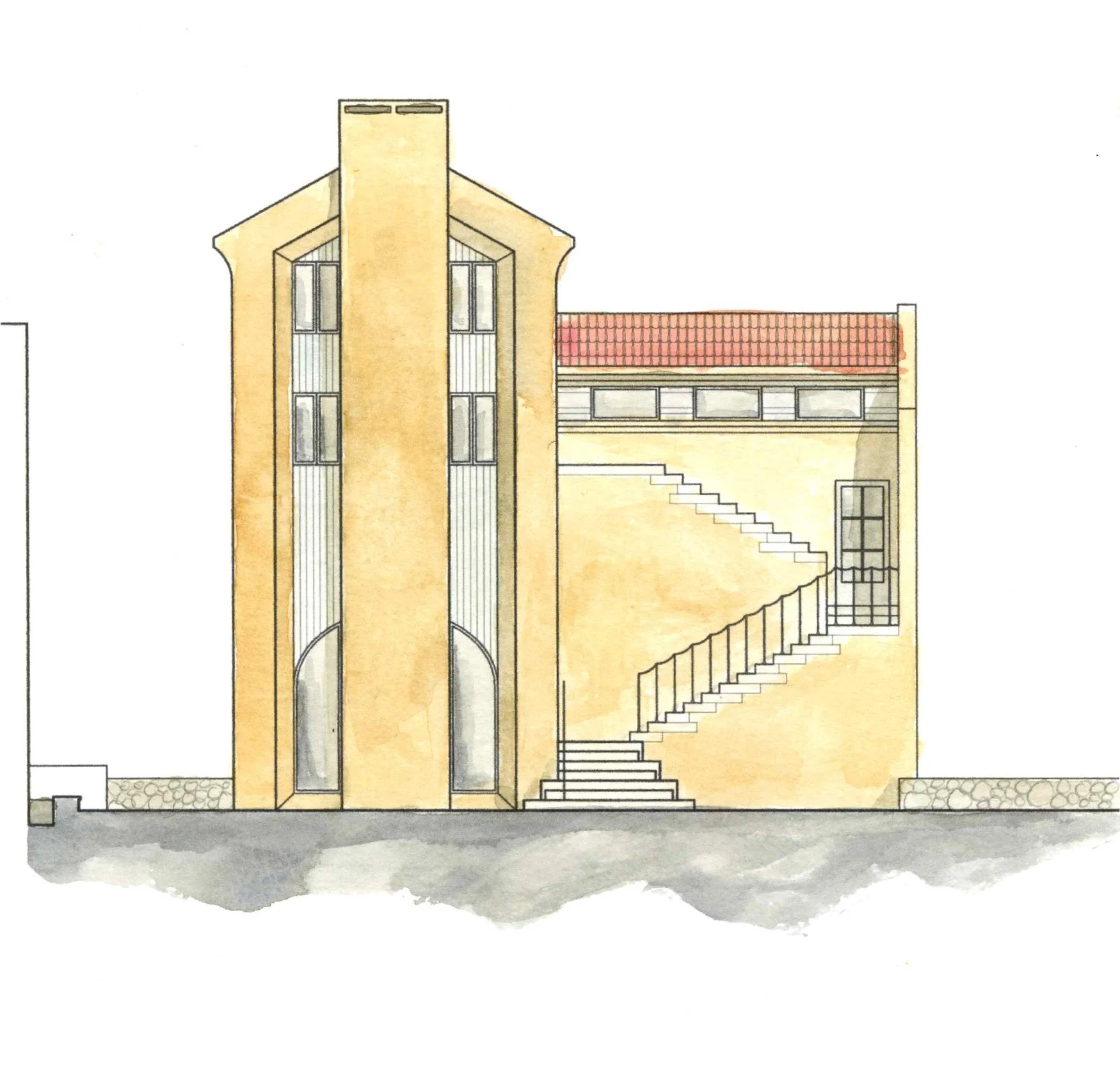

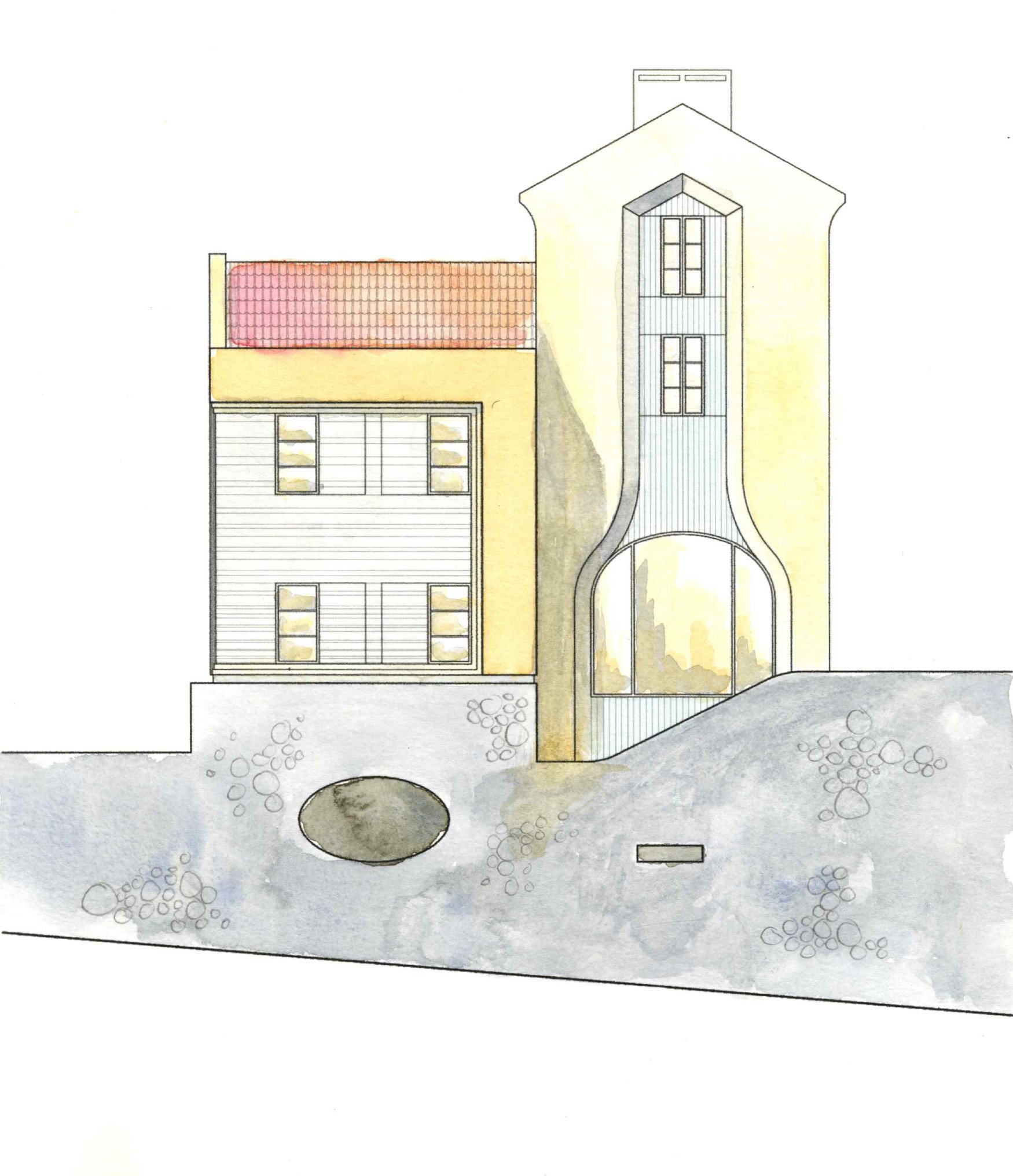
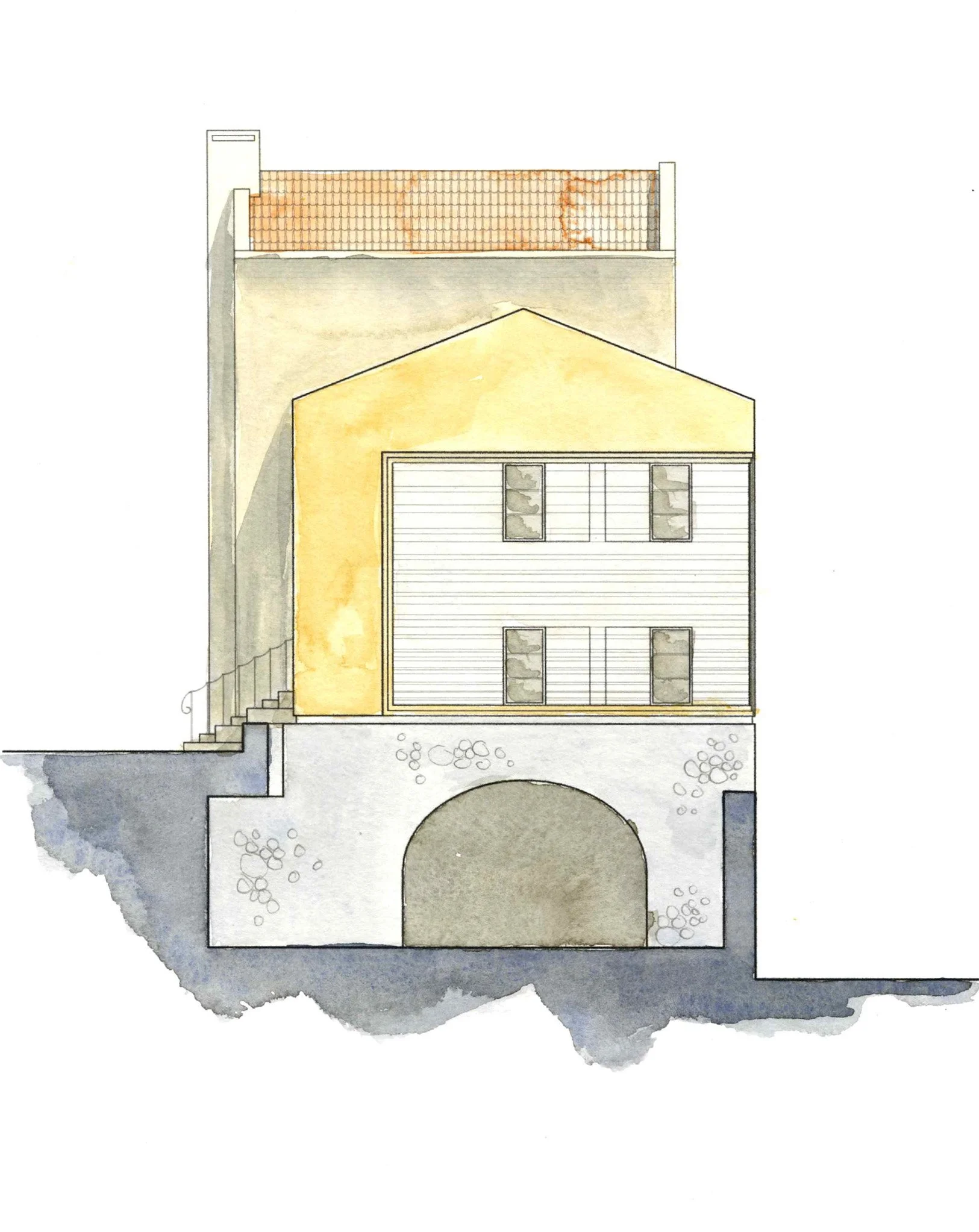
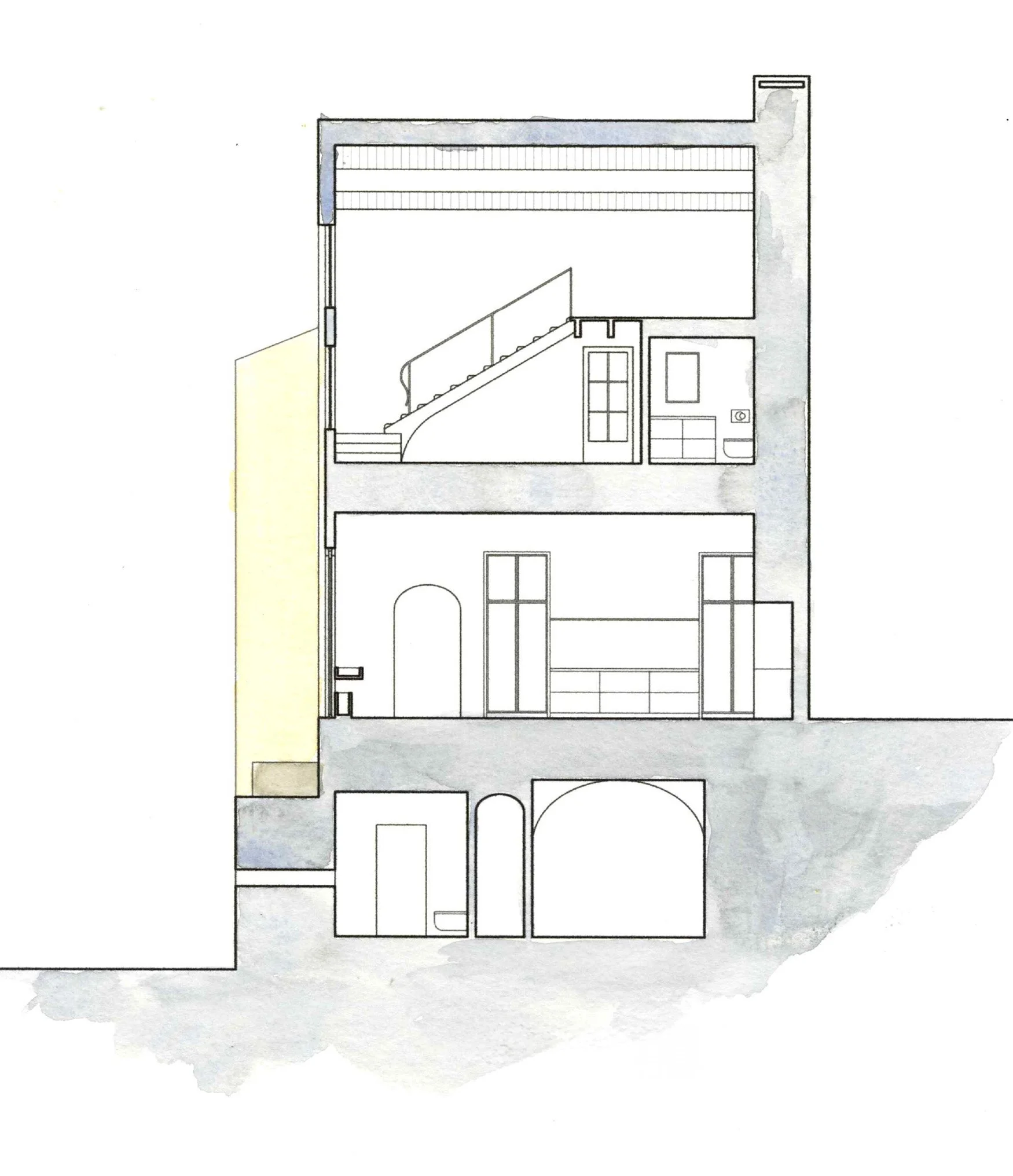
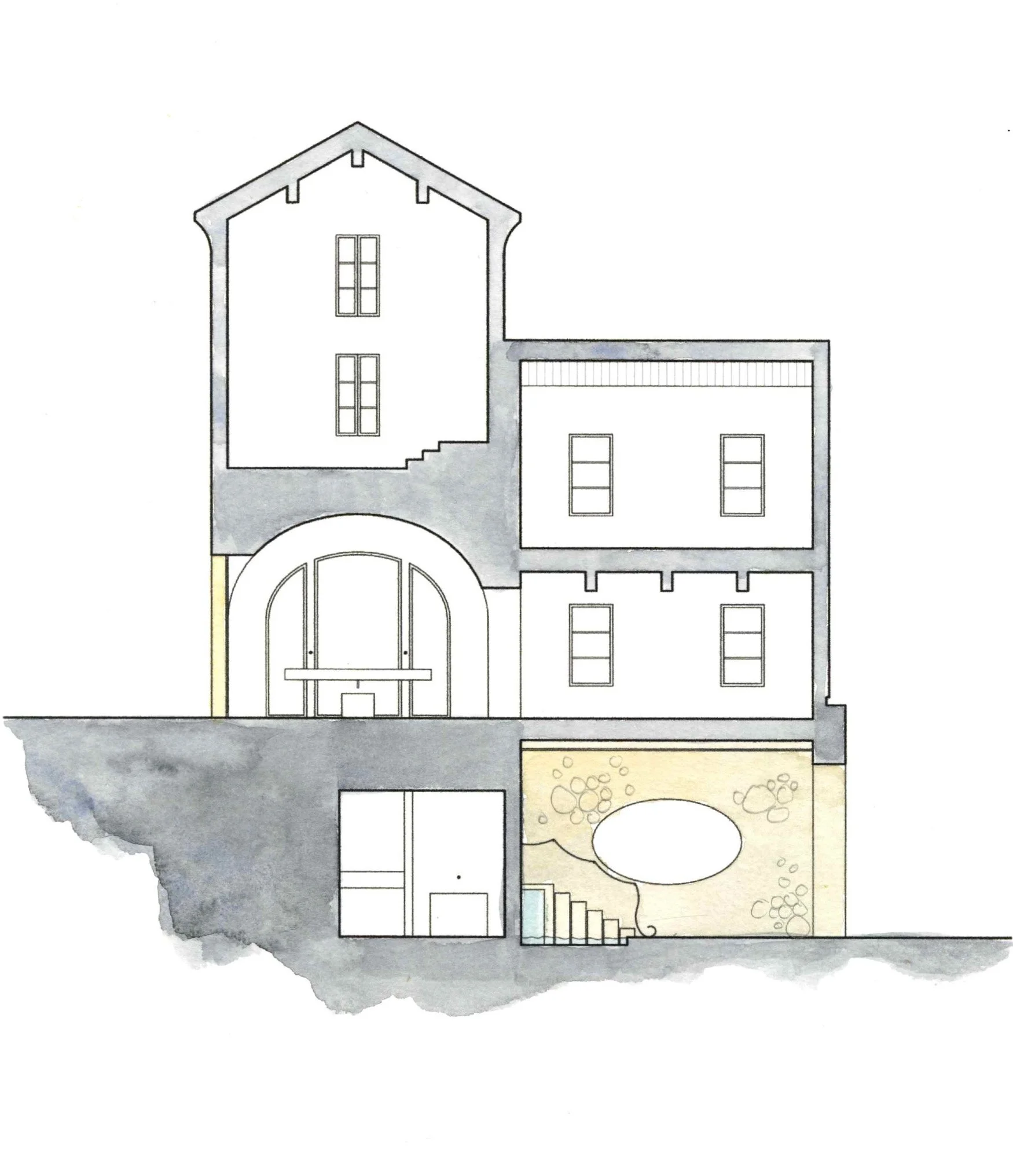
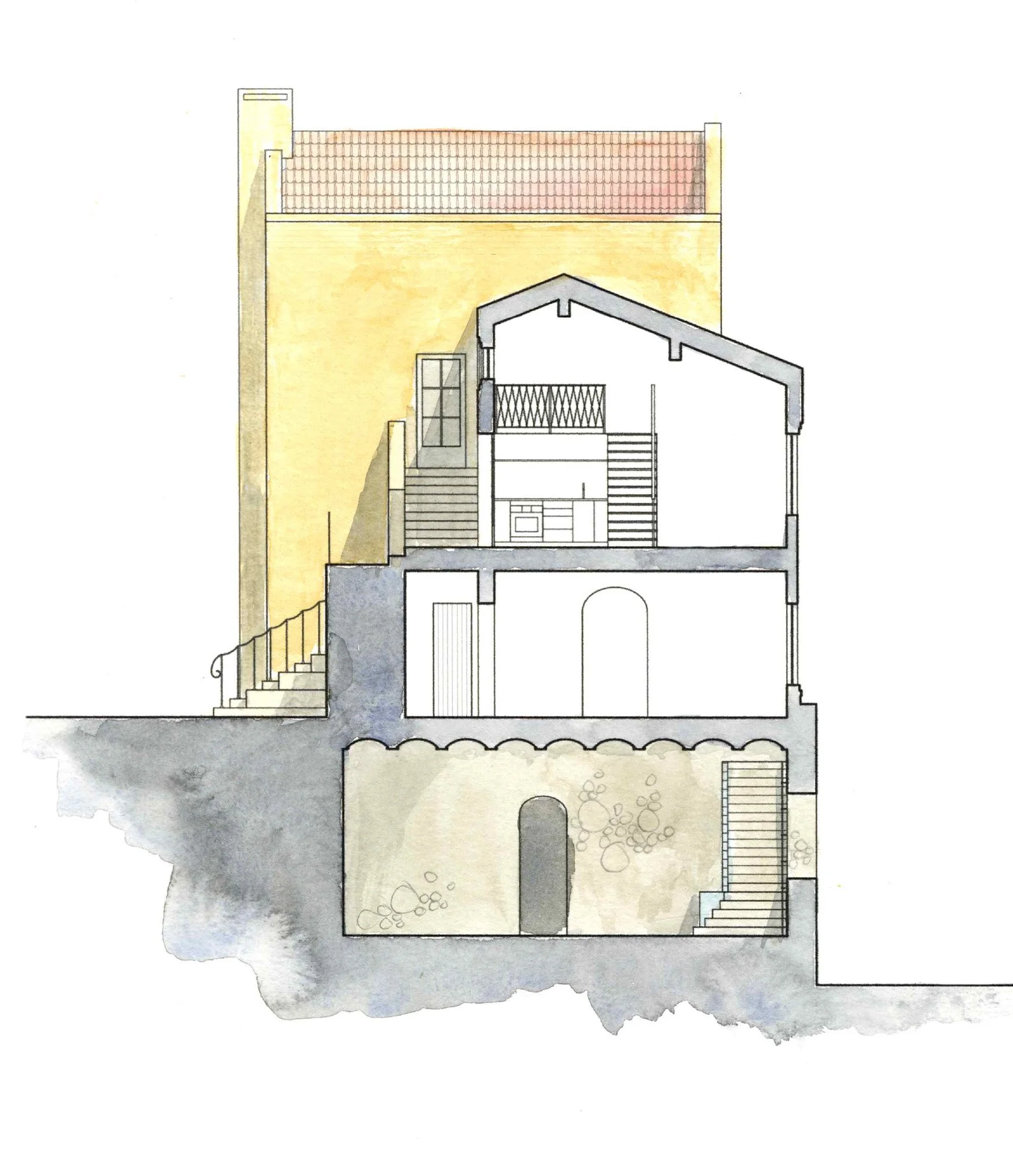
The facade is meant to feel reminiscent of the vernacular architecture, while featuring more contemporary details. Divided into two distinct personalities, one features vertical scalloped paneling and shutters while the other feels more horizontal with an ombre of increasing panel sizes. There is a terra-cotta roof, though it ends short of the edge of the building in a contemporary manner. The vertical building flares out at the top, referencing a genoise cornice, traditionally made of three rows of terra cotta-tiles.
The building is meant to appear as two separate homes that have been joined, featuring different ceiling and floor heights. Each room features a different ceiling treatment, inspired by different ceilings around the village. Special attention was paid to the detailing of railings, inspired by the ironwork prevalent throughout the Luberon, many of which are exaggerated to appear as ropes draped down to the floor.
The cellar, open to the courtyard, offers an outdoor cooking space for the summer, featuring a movable island and pizza oven, referencing the summer kitchens common in the Luberon meant to keep the main building cooler in warmer months. On the ground level, the primary visitor space, visitors enter from Rue Basse into the kitchen where they can cook, and then move onto the dining room beyond to enjoy a meal together. Accessed via exterior stairs, the upper floors feature two private apartments, each on its own half level for hosting visitors.

Cellar (0)
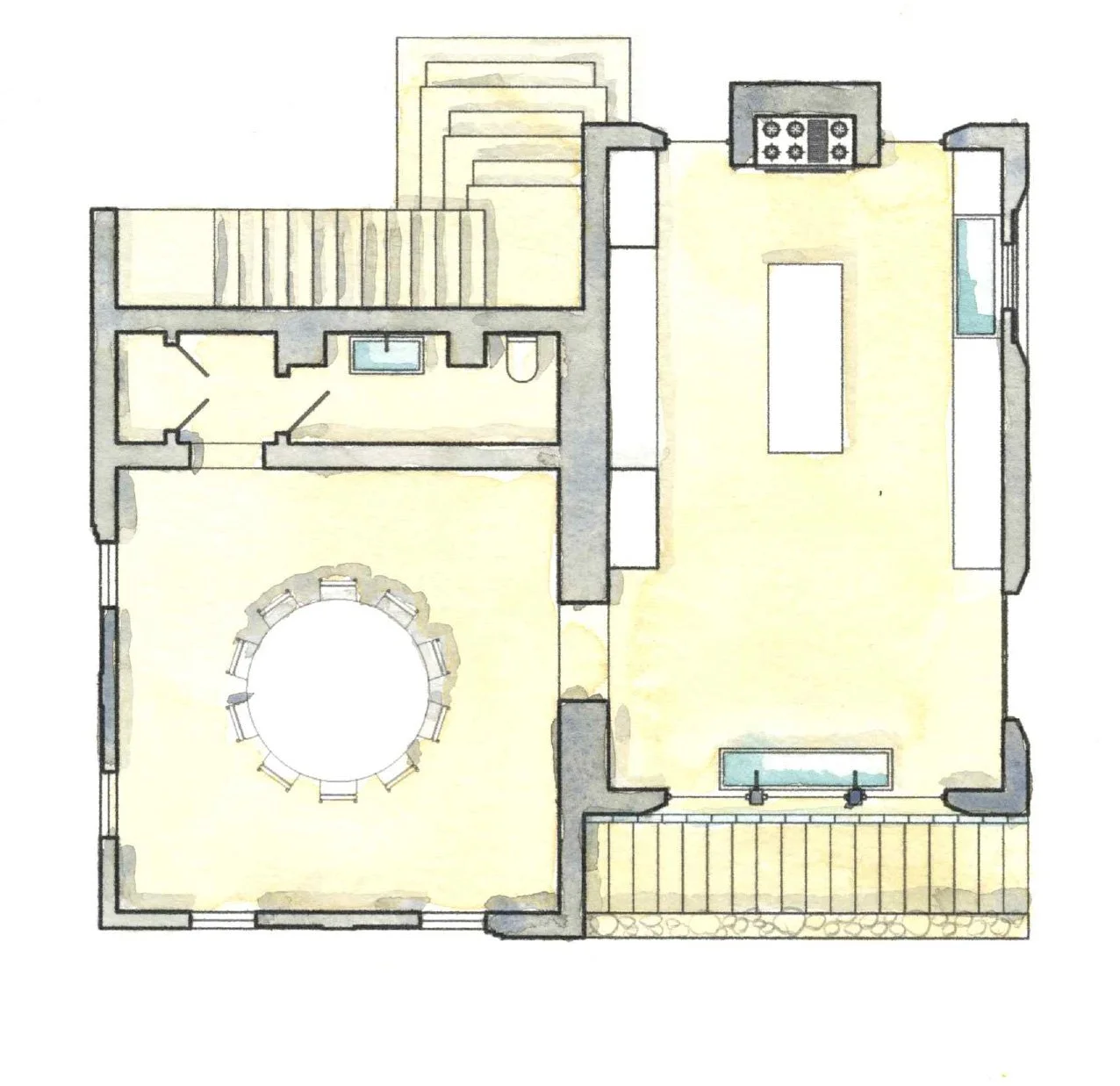
Ground Level (1)
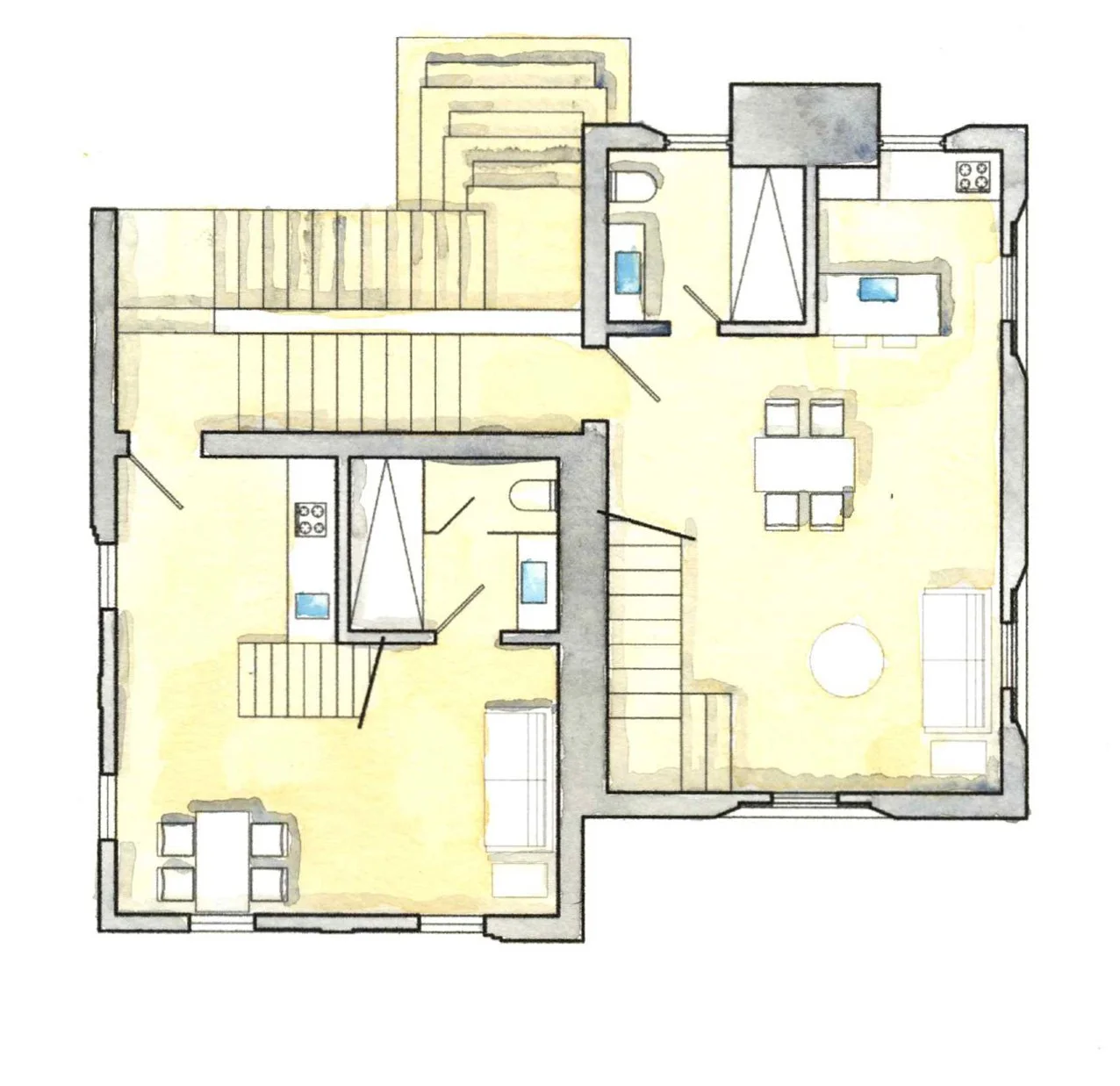
Apartments (2)
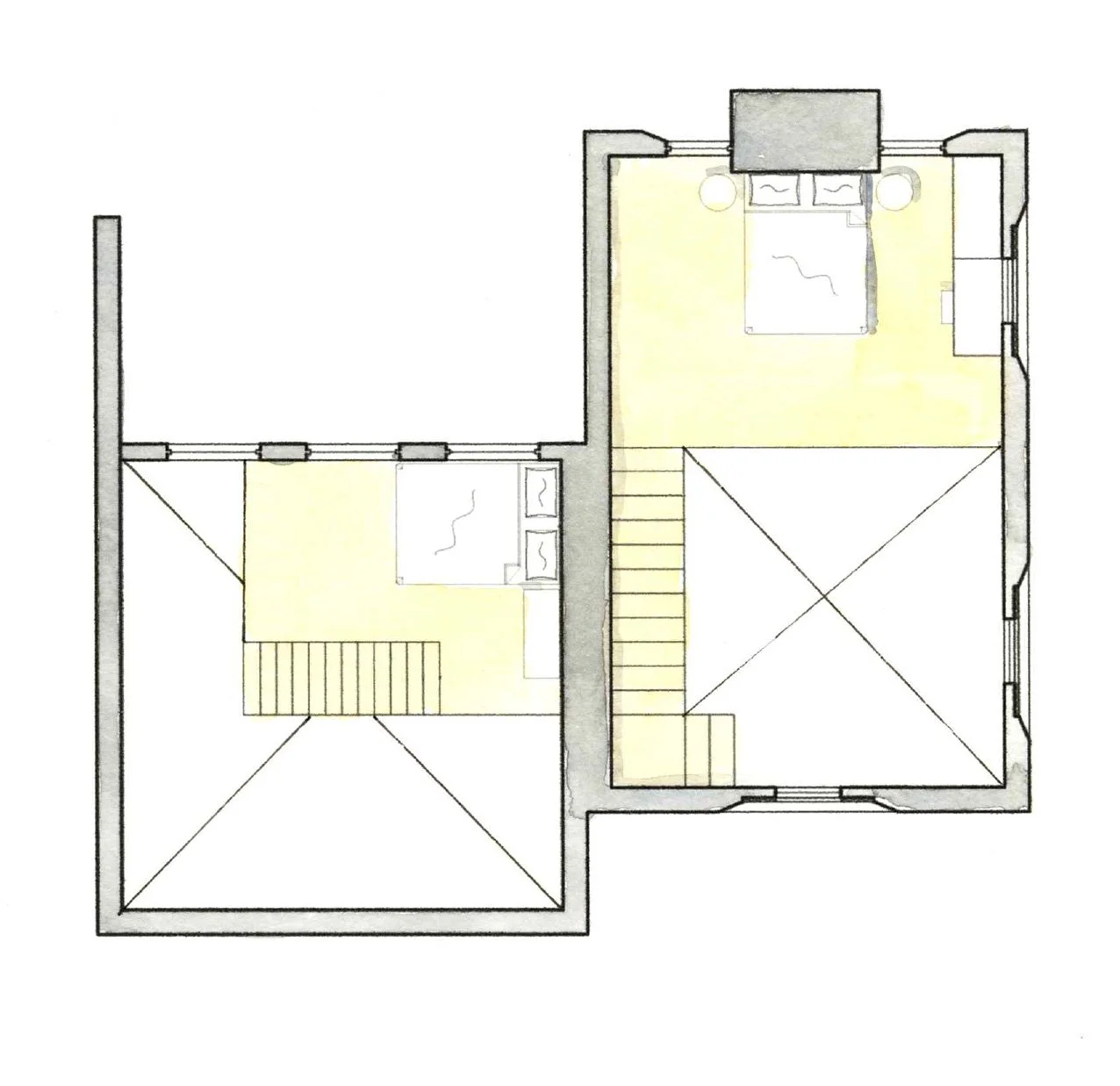
Loft (3)
A barrel vault creates a coziness in the kitchen and brings visitors closer together. A large stone sink is placed in a window as a nod to a historic eiguie, and the stove is located within a fireplace-like alcove as a traditional kitchen would have had. An island is designed in mesh, referencing a garde-manger, a traditional way of storing food. Plenty of space is provided to facilitate many people cooking together in the space.
The stairs into the cellar level are inspired by similar stairs found along Rue Basse. It swoops under the building and into the cellar below, creating a sense of whimsy. Along side of it, a small reveal creates a fountain to create the sound of trickling water that falls into a pool at the bottom. There, the steps are monolithic stone blocks that extrude from the water and sweep into the room. The ceiling features a barrel vault, common in lower levels around the village.
The windows are also taken from the common windows of the region, though they have been contemporized by recessing them into the wall. On the kitchen mass, vertical scalloped shutters & paneling details reference the barrel vaults of the region and imply verticality while on the dining mass, an ombre of varying panel sizes create a horizontal focus.